Hugo Jenkins · 1 October 2026
Cross-Border Funding Spurs Joint Student Experiments in Eastern European Technical Labs
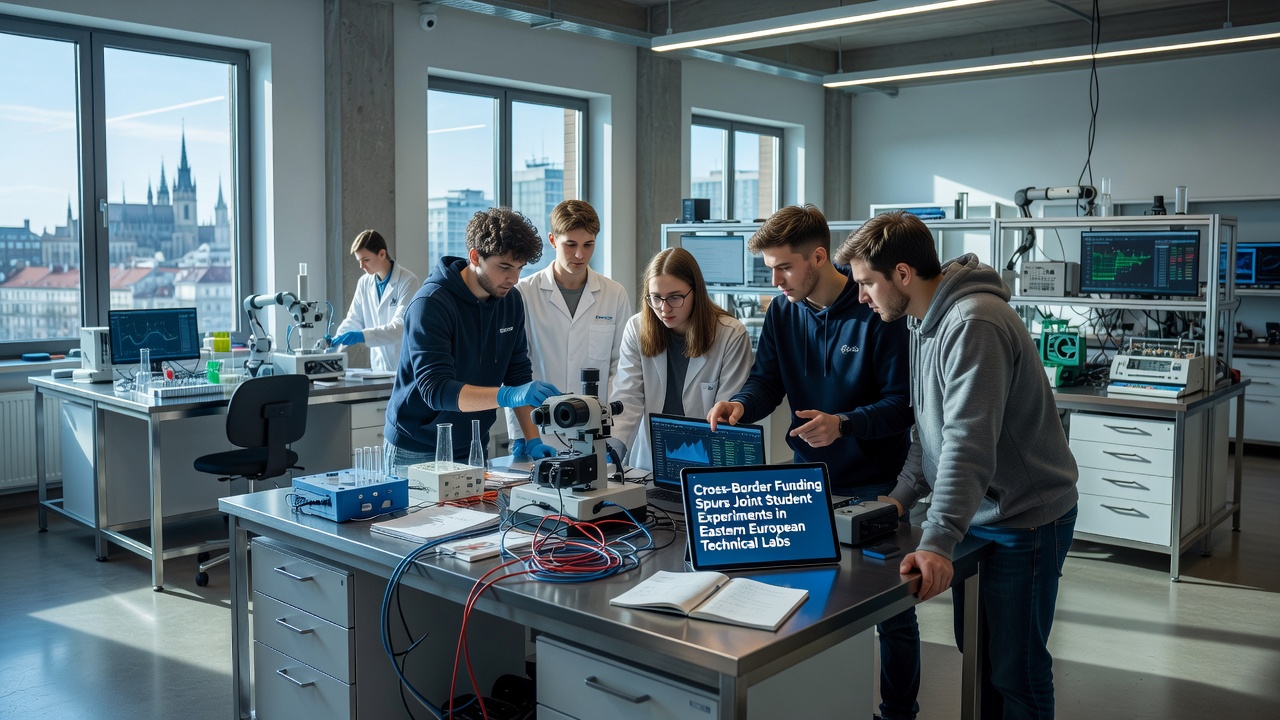
Cross-border funding initiatives have expanded joint student experiments across technical laboratories in Eastern Europe, with programs drawing resources from multiple national and regional sources to support collaborative projects in engineering and applied sciences. These efforts connect institutions in Poland, Hungary, Romania, and neighboring countries through shared grants that cover equipment access, travel, and materials for prototype development. Data from the European Commission shows that allocations under transnational education frameworks reached several hundred million euros in recent cycles, enabling teams to conduct experiments that individual universities could not fund alone.
Funding Mechanisms and Regional Participation
European Union programs such as Horizon Europe and Erasmus+ have allocated portions of their budgets specifically to cross-border laboratory work, while national agencies in the Czech Republic and Slovakia contribute matching funds for student-led initiatives. Observers note that participation rates rose steadily through 2025, and by October 2026 more than 120 joint projects were active across the region. These arrangements allow students from different countries to share laboratory time, test equipment, and data sets on topics ranging from renewable energy components to advanced materials testing. Researchers at participating institutions report that coordination occurs through virtual platforms supplemented by periodic in-person sessions at host labs.
One study from the Organisation for Economic Co-operation and Development tracked outcomes in similar funding models and found measurable increases in the number of multi-country student teams completing functional prototypes within a single academic year. The same report highlighted that Eastern European technical programs benefited from access to specialized equipment located in partner facilities, reducing duplication of purchases and allowing experiments to proceed on tighter timelines. Funding guidelines typically require documented collaboration agreements and shared authorship on resulting technical reports.
Laboratory Projects and Student Involvement
Joint experiments have focused on areas such as additive manufacturing processes, sensor calibration for industrial applications, and fluid dynamics modeling using shared wind tunnel facilities. In one documented case, teams from technical universities in Bucharest and Budapest worked together on a heat exchanger prototype that incorporated designs tested across both sites. Students exchanged CAD files and measurement data through secure repositories, while on-site visits permitted hands-on assembly and validation under supervision from faculty members at each location.
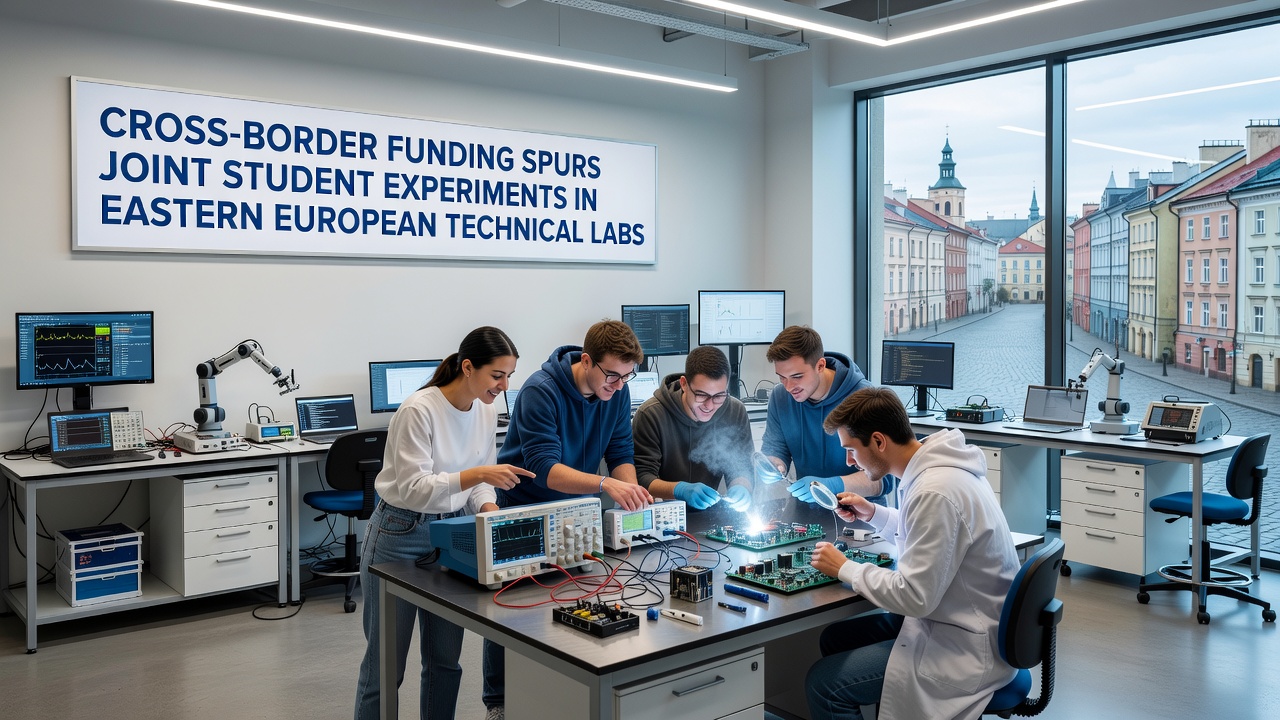
Additional projects have examined vibration analysis techniques for mechanical systems and low-cost robotics platforms for agricultural monitoring. Figures released by the Polish Ministry of Education and Science indicate that over 800 students participated in these funded activities during the 2025-2026 period. Laboratory logs show that experiment cycles often incorporate iterative testing phases, with data collected at one site validated at another to confirm consistency across different environmental conditions. Coordination protocols require regular progress updates and joint presentations at regional conferences.
Equipment Sharing and Technical Outcomes
Shared access arrangements have enabled students to utilize high-precision measurement tools and simulation software that remain expensive for single institutions to maintain. Technical reports compiled from these projects list specific improvements in prototype performance metrics, including reduced material waste during fabrication and higher accuracy in sensor readings. According to records maintained by the Visegrad Fund, which supports cooperation among Central European countries, equipment utilization rates in participating labs increased by approximately 35 percent after cross-border agreements took effect.
Students involved in these experiments gain experience with standardized documentation practices and remote collaboration tools, skills that align with requirements in multinational engineering firms. Laboratory managers coordinate maintenance schedules to accommodate visiting teams, and safety briefings occur in multiple languages to ensure all participants understand protocols. Data repositories established under the funding programs preserve experimental results for future reference by subsequent student cohorts.
Conclusion
Cross-border funding has produced documented increases in the scale and frequency of joint student experiments within Eastern European technical laboratories, supported by structured grant mechanisms and equipment-sharing agreements. Records from October 2026 confirm ongoing activity across multiple countries, with measurable participation numbers and completed project outputs. These arrangements continue to link laboratory resources and student teams through established administrative channels, producing technical reports and prototype records that reflect the combined contributions of participating institutions.